Bringing the functions together
I built an Arduino-based smart-home model with several sensors and automated functions connected into one wired electronic system. I worked on the wiring and control logic, then debugged the connections and code until the functions operated together.
Working on the model taught me to trace a problem through the circuit and the code instead of assuming it belonged to only one of them.
Adding a solar-power option
I added a photovoltaic cell power source and tested how the model behaved with that supply. The basic electrical relationship is:
Power depends on both voltage and current. A supply needs to provide the conditions required by the connected electronics, including changes in demand as the functions operate. The equation is background for the power question, not a claimed measurement of the model’s solar output.
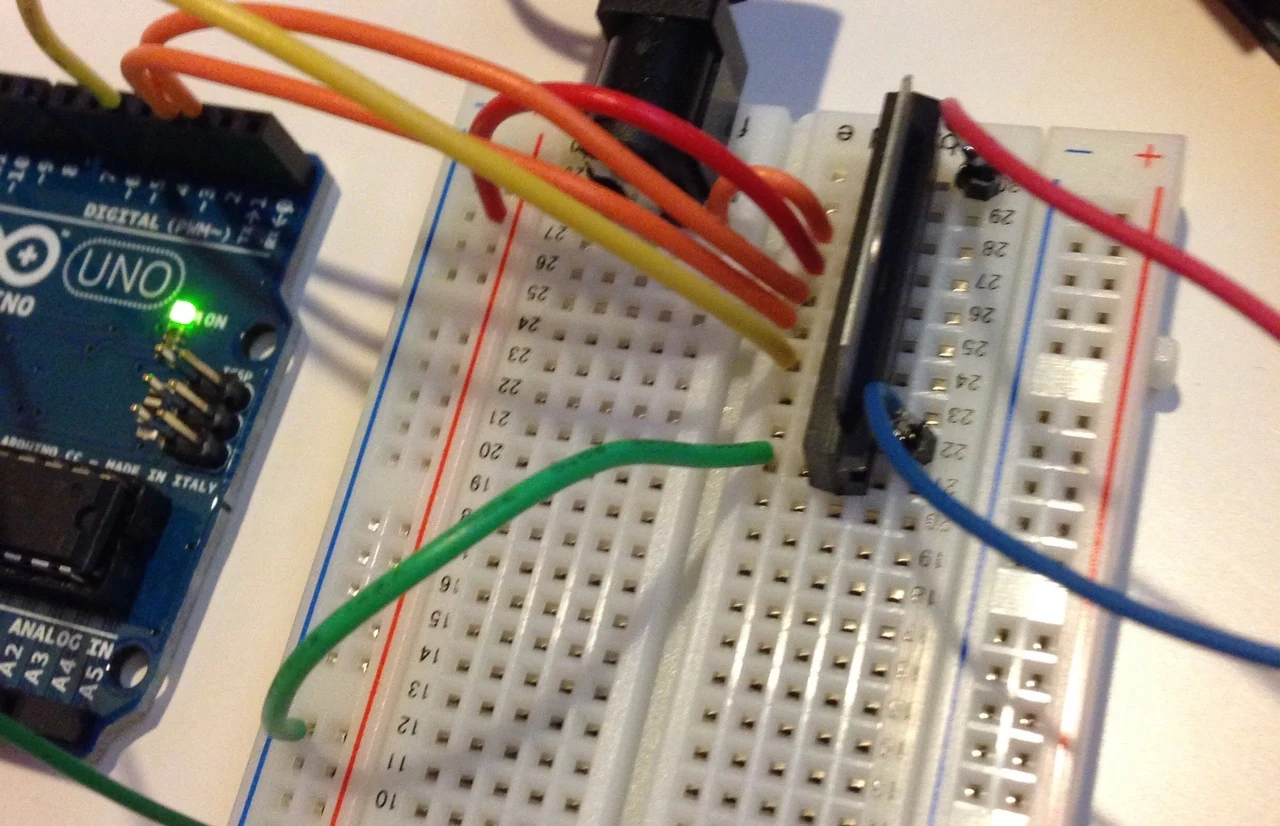
The project reached a working, debugged model with integrated sensors and a solar-power option. The reference photograph above shows an Arduino circuit, rather than my smart-home assembly.